

AlphaStack (early beta): performance tracking on scraped author picks
Not (yet) a reliable guide on an author’s total return performance.

Not investment advice.
Terminal » AlphaStack now tracks the performance of >700 historical trade picks and view proxies from across >60 authors on Finance Substack going back as far as 2022.
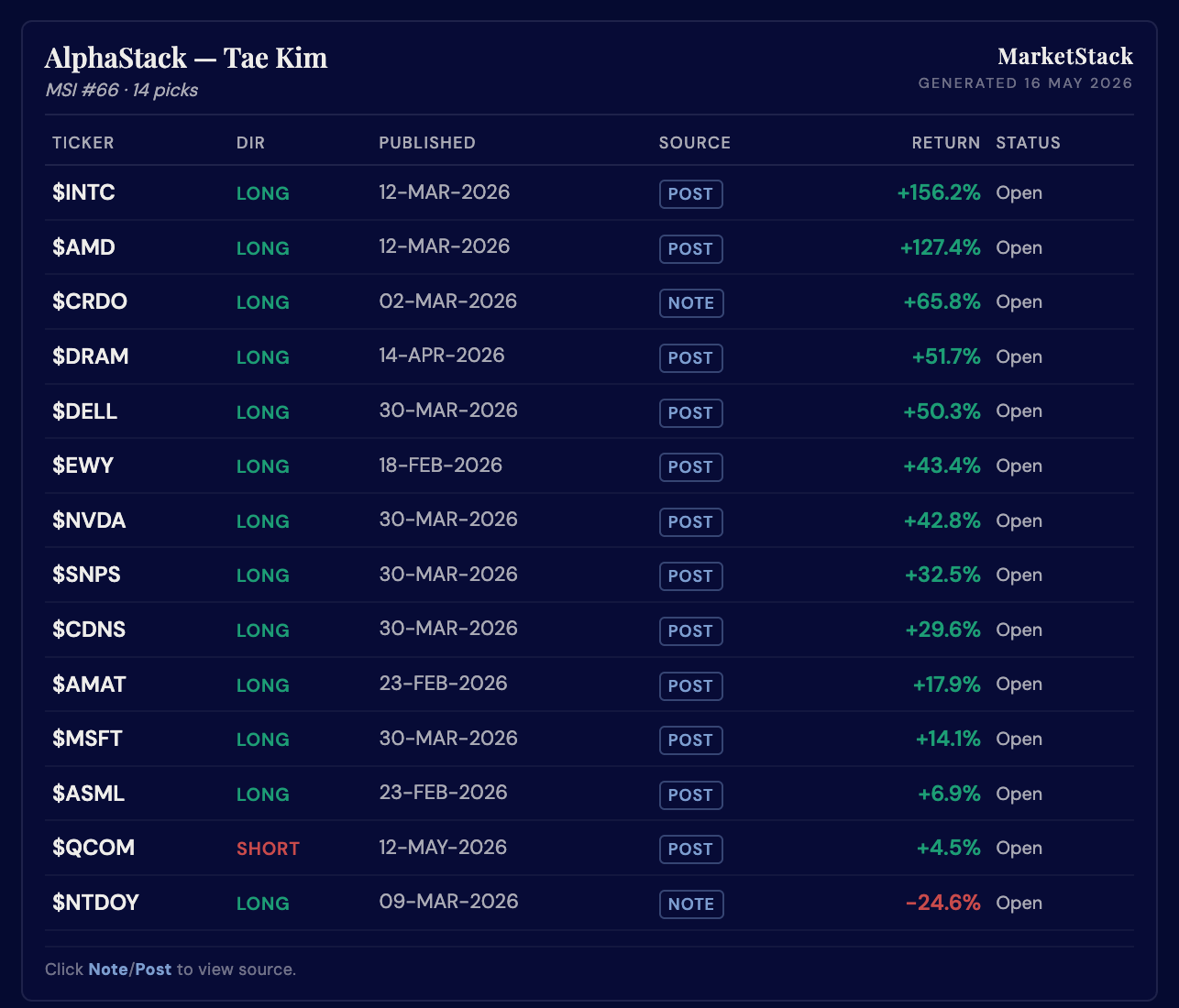
Tae’s were manually verified but they are mostly AI-inferred from a pool of more than 37,000 articles and 4,500 Notes. The model reads each post’s full body and emits structured output.
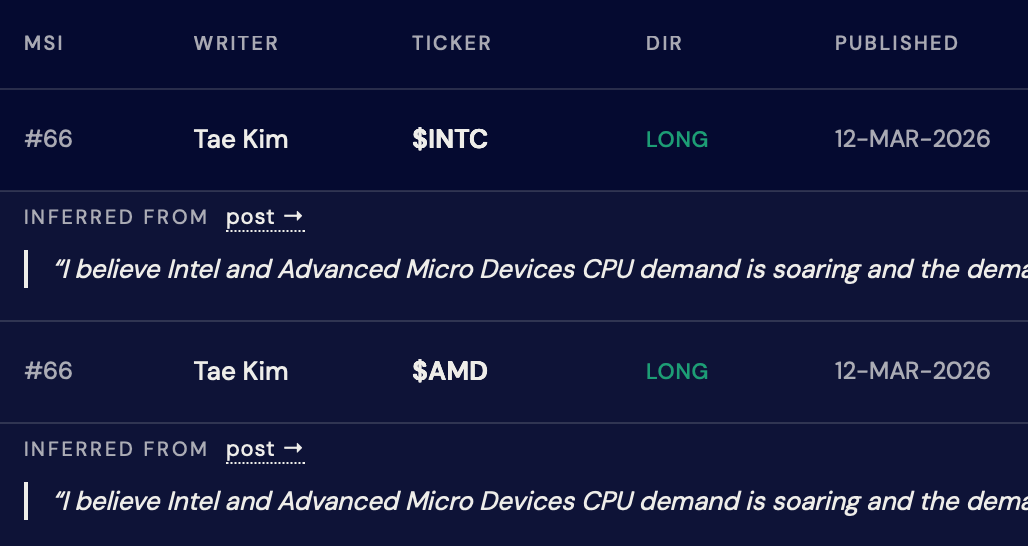
It can mis-identify a stance, miss an exit, or mis-estimate the entry date. For that reason, the display architecture has been intentionally designed for rapid user auditing; every line item expands out the verbatim quote the model relied upon to output the trade, with a clickable link out to the source post:
Picks are presented as historical records, not recommendations. Returns reflect underlying price moves only. The content pool scraped is non-paywalled, with the exception of Tae Kim and Grey Rabbit Finance for whom the paid archive is included.
What it is NOT
A comprehensive log of every trade — AlphaStack is not (yet) a reliable guide on an author’s total return performance, which is why there is no leaderboard. The existing dataset reflects only what came through cleanly in the scrape pipeline. For most writers, what you see is a partial slice of their actual call history, and a slice that can contain inaccuracies as described above.
What it is
A quick way to compare how early authors were positioning on a particular name and click through to what they were writing at that time:
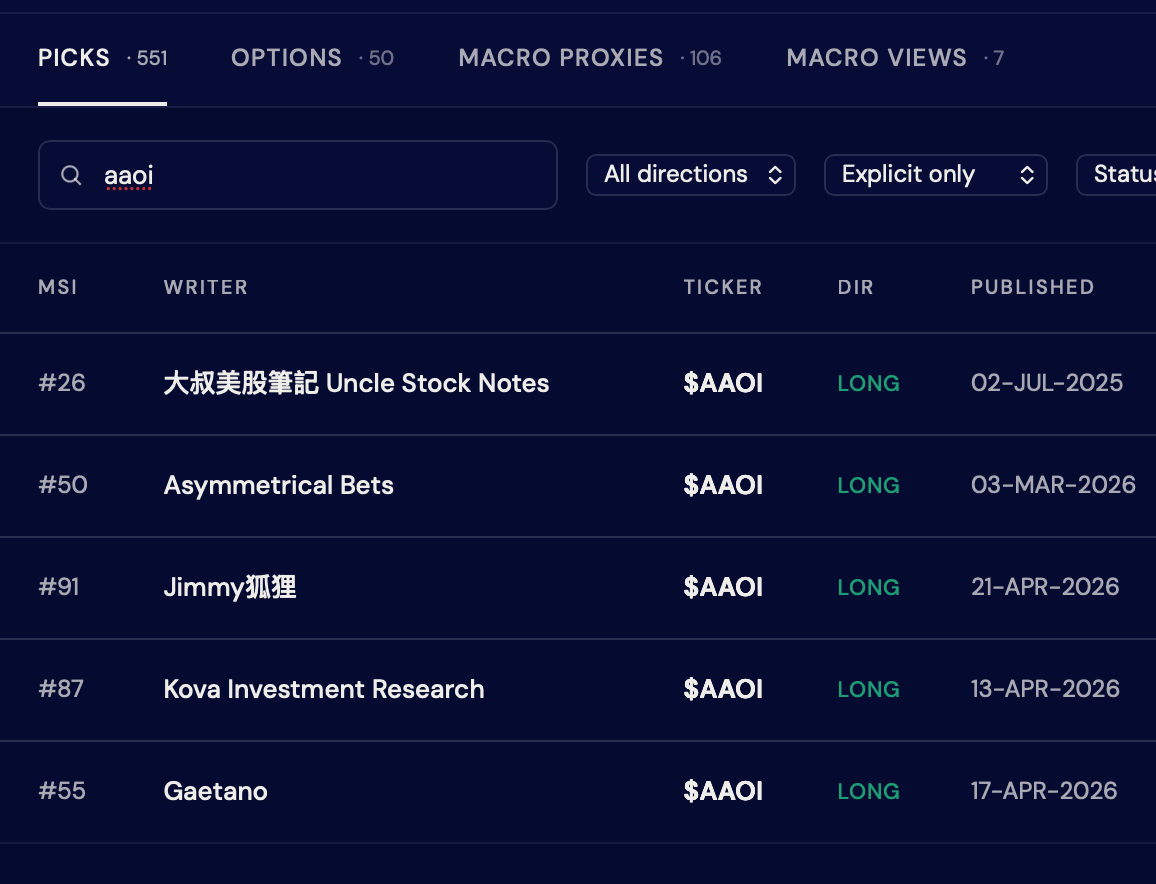
A quick way to see when authors came in and out of a position:
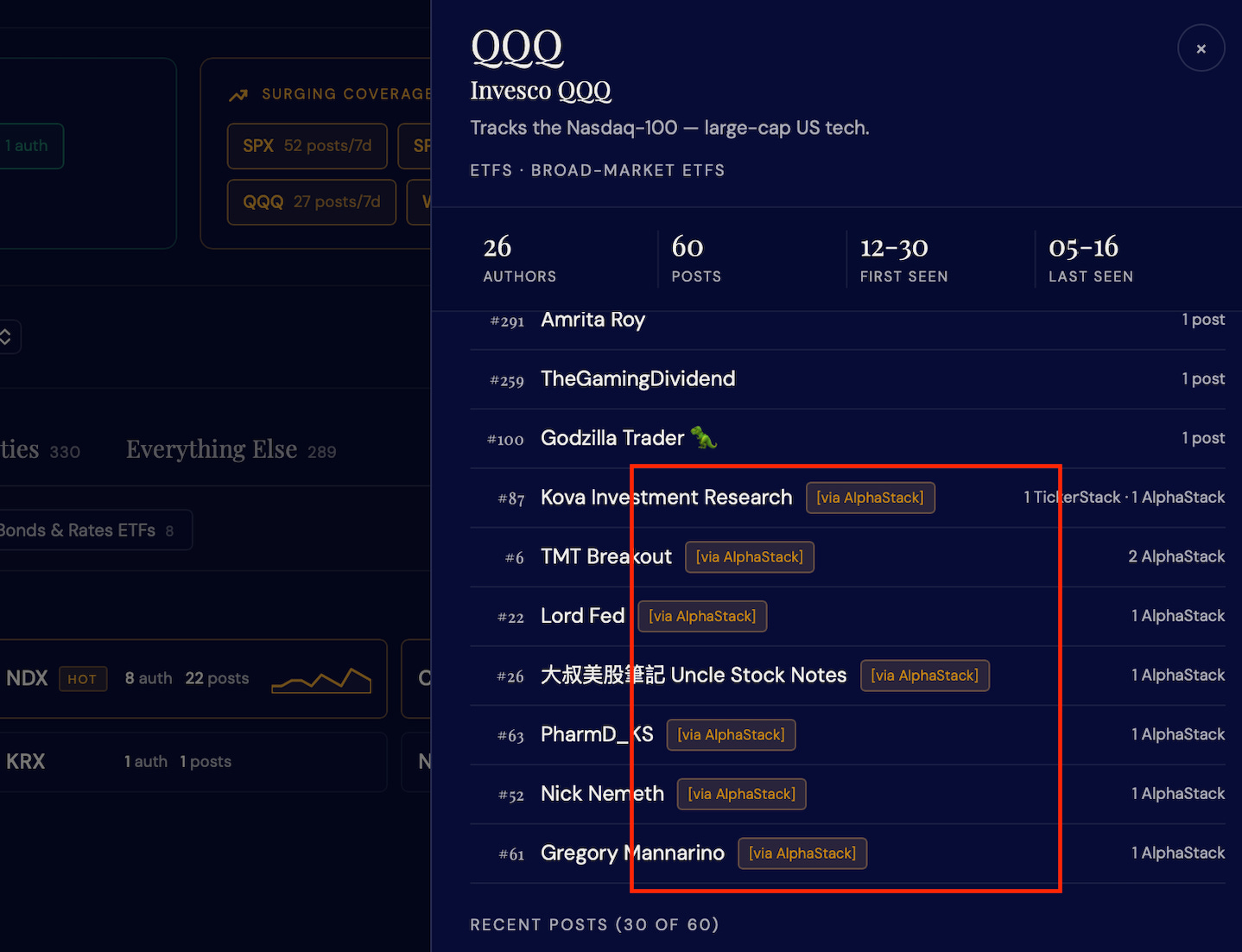
A quick way to see which authors are publishing actual picks on tickers you follow; the authors with positions scraped in AlphaStack are tagged as such in ticker panels within TickerStack:
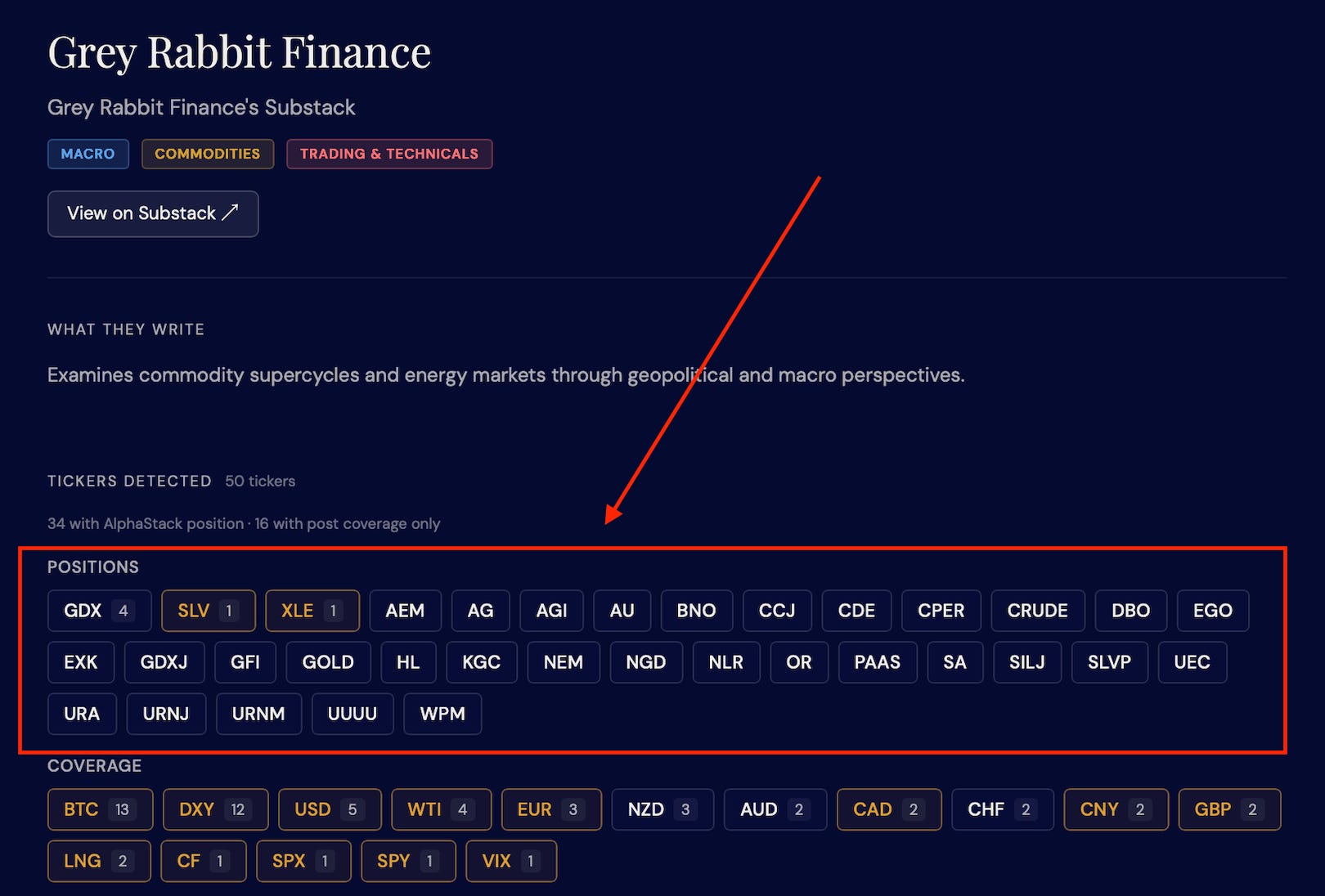
A quick way to see what positions an author you follow has published on; all positions in AlphaStack appear on the author’s page:
There are four sub-tabs:
Picks — single-stock long/short positions.
Options — calls and puts. It can’t price options without knowing strike and expiry, so the column shows the underlying equity’s move since the position was opened, colour-coded by whether the writer’s directional bet was right (green) or wrong (red). It’s a directional signal, not actual P/L — the explainer at the top of the tab makes that explicit.
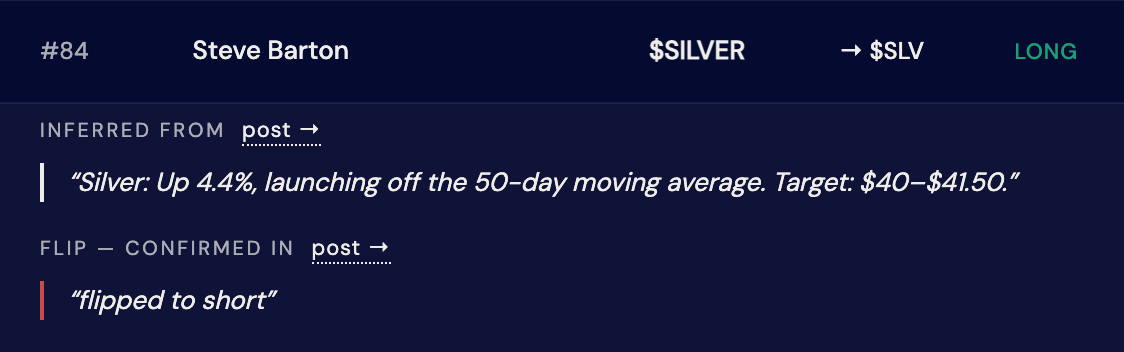
Macro Proxies — themes (gold, uranium, oil, China, rates, Korean equities) priced via the most representative ETF. The substitution shows in each row as THEME → PROXY
Macro Views — qualitative views without a clean ETF proxy.
Update cadence
AlphaStack will be updated ad hoc, depending on the response to this first release from users and authors.
What’s next:
Authors are most welcome to share their archive for me to add to the tracker if they can link evidence to the date of every pick or view.
Users are most welcome to share an author they would like me to include that is not there.
For now: explore, click through anything that looks suspect, and tell me what it’s getting wrong. I expect as much. Rather than wait for perfection, I am shipping an earlier version, the best products are built alongside users.
— MarketStack
Visit MarketStack The Edit · MarketStack Terminal
MarketStack is free today. But if you value my work, you can pledge for a future subscription. MarketStack is an independent, anonymous publication summarising publicly available commentary and views from across financial media. Nothing here constitutes financial advice or a recommendation to buy, sell or hold any security. All views are a synthesis of public information. Past performance is not a guide to future results. This publication is not authorised or regulated by the Financial Conduct Authority. The author writes anonymously in a personal capacity.
What do you do with articles when there is a trade idea but the name is behind paywall?