

ChartStack
May contain anxiety.

Not investment advice
Disclaimer: this one kind of shook me.
The permanent underclass of an AI productivity boom — Doug O'Laughlin (MS Coherence score 89)
Since 1973, productivity has roughly doubled relative to wages, with the gap widening into a projected "53% chasm" by 2040. That projection assumes 2.7%/yr productivity growth versus just 0.8%/yr wage growth driven by AI displacing knowledge workers.
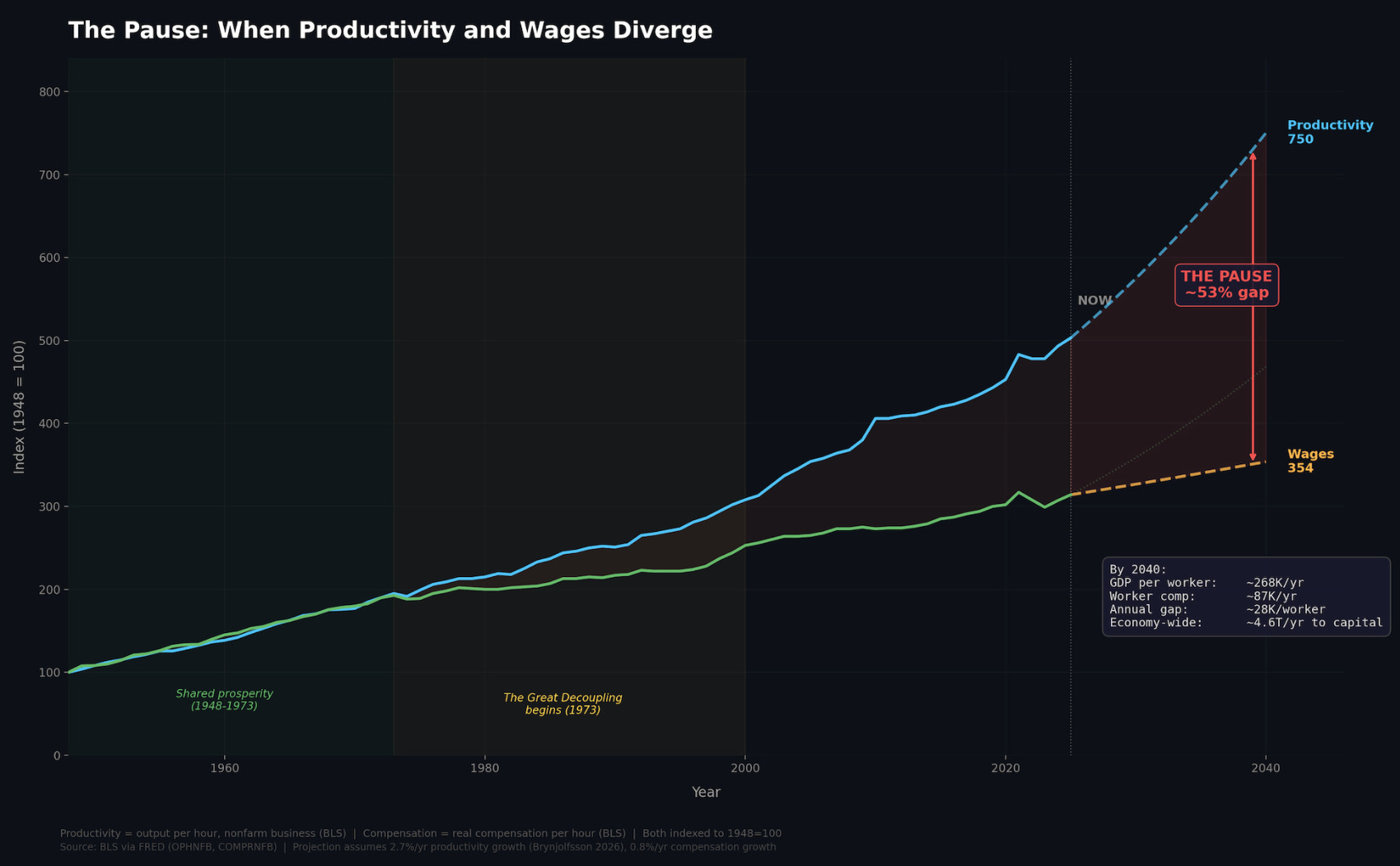
2.7% is an upper-tail scenario, it assumes AI replicates the single best productivity episode of the last half-century and makes it durable. It’s not fantastical — we’ve actually seen ~2.7% before, briefly. But it requires AI to not just lift productivity off the recent floor (~1.3%) but to roughly double it and sustain that for a decade and a half. That’s a strong bet, not a base case.
British working-class wages stagnated while per-capita GDP expanded rapidly during the industrial revolution. Artisan workers in the domestic system were replaced by machines, often tended by children. The returns of this output were extremely uneven, corporate profits were captured by industrialists who reinvested them heavily into more factories and more machines.
In this context, my post ‘Corporate class: a mass deception’, written after Jack Dorsey published his essay ‘From Hierarchy to Intelligence’ comes to mind.
Also explains a very predictable chart from a16z (MS Coherence score 67)…
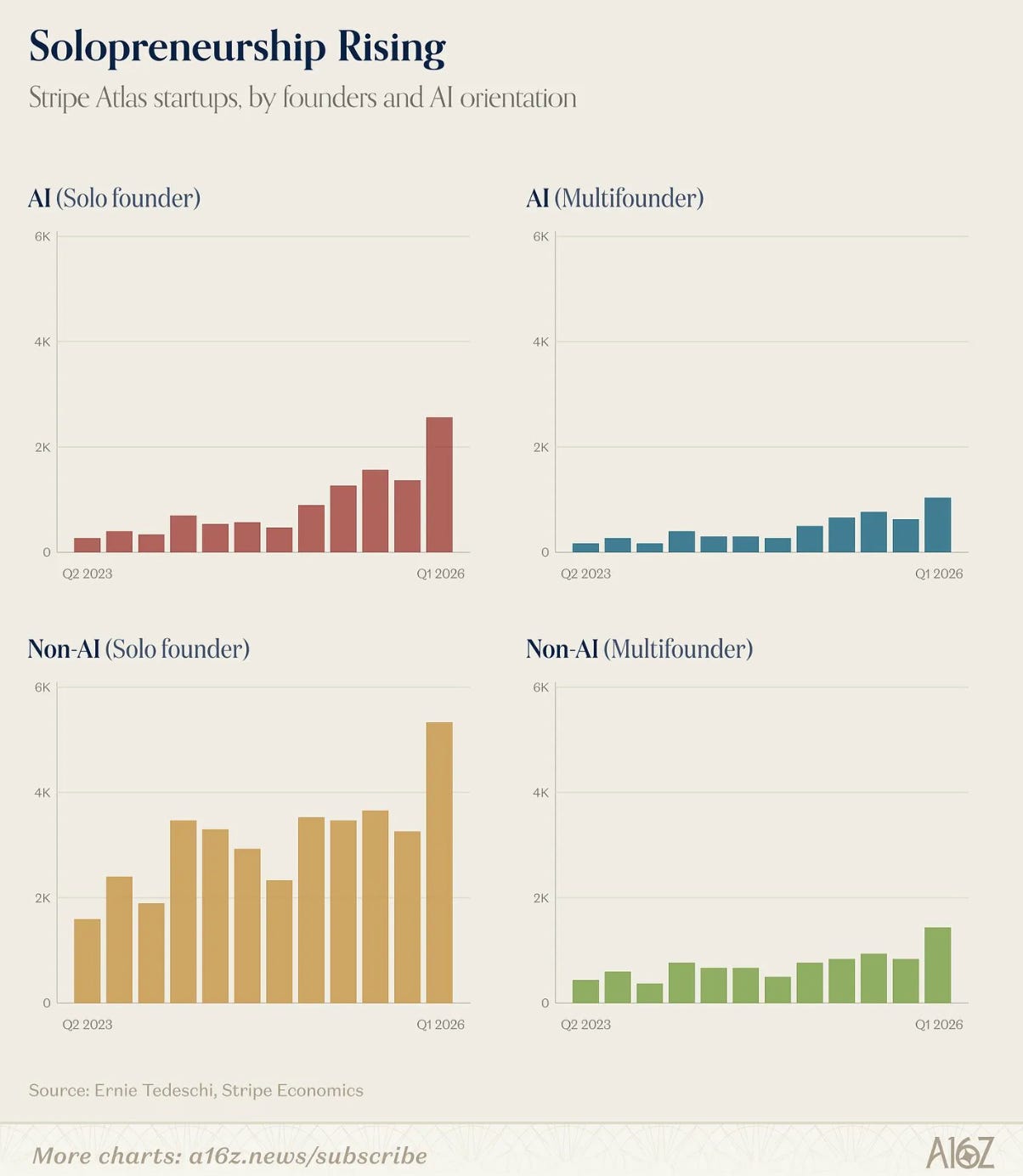
But/so maybe we need AI more than AI exuberance needs us? — MarketStack
Everyone has seen the declining fertility charts, fewer have registered the Africa exception.
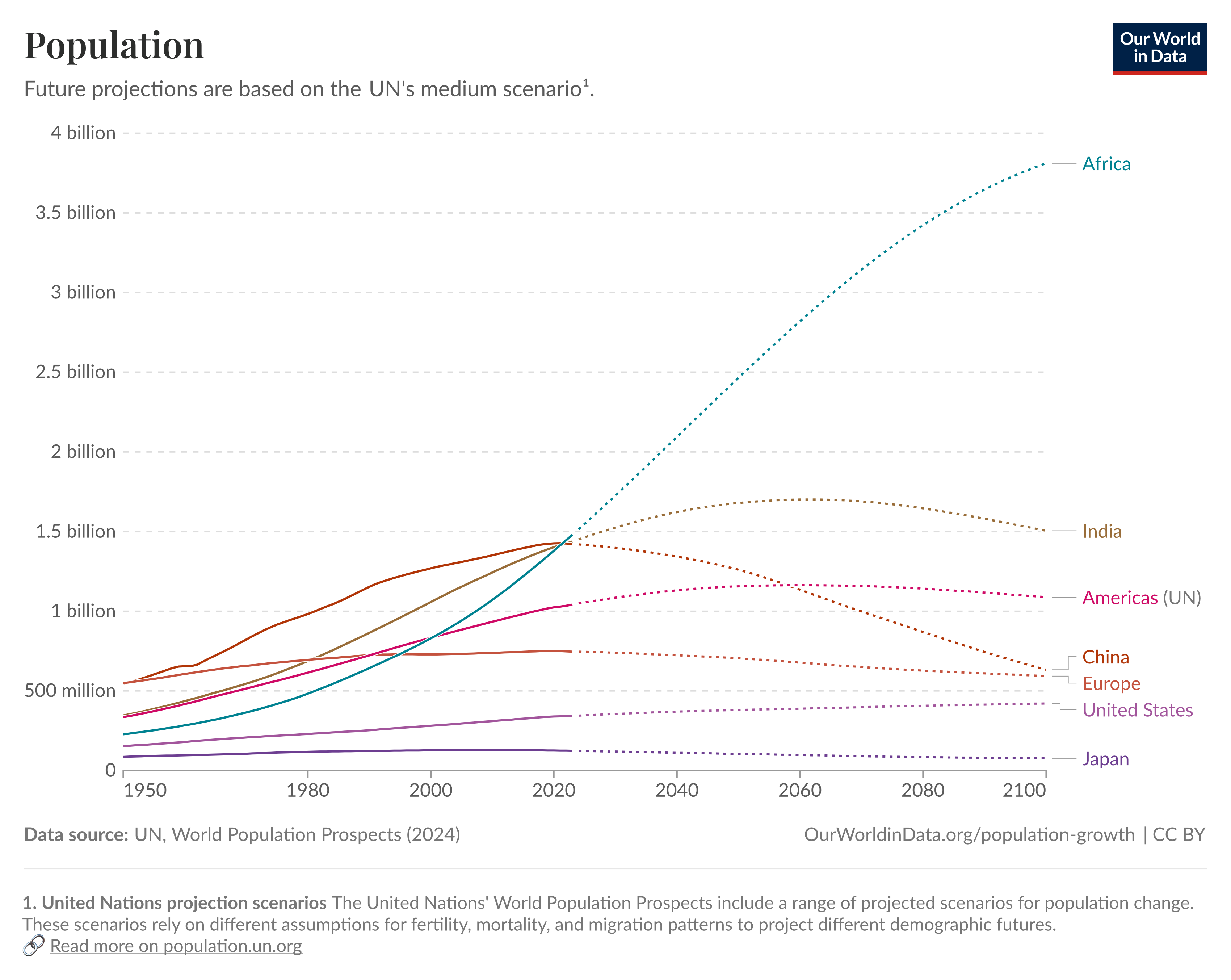
My unanswered question: what does the Africa exception mean as capital learns to substitute for labour? Lots have written about the rich world’s labour shortage, framing AI capex as a demography hedge, but none of them turn to the question that AI may pull up the development ladder exactly as Africa reaches it, and the deeper question of whether capital still follows population at all.
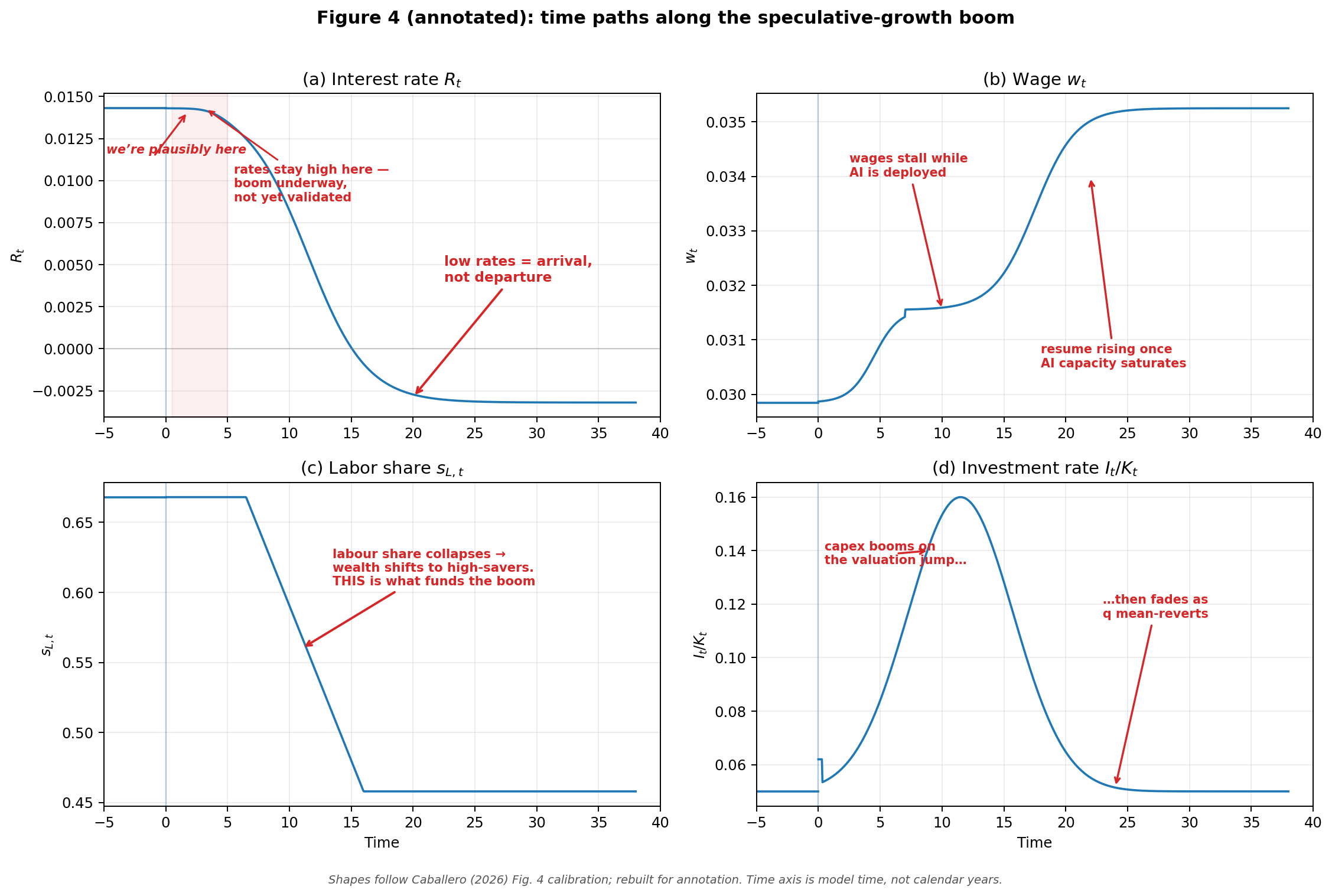
Rates fall last — MIT Economics
As AI concentrates wealth with people who save, that saving wave is what eventually pulls rates down and validates the valuations. Low rates are then the signal that the boom’s saving feedback has done its work. High rates, on that reading, would mark an economy still early in the transition rather than one that’s arrived. If the lens holds, we’re early, not safe.
5% is behaving like a floor, not a ceiling.
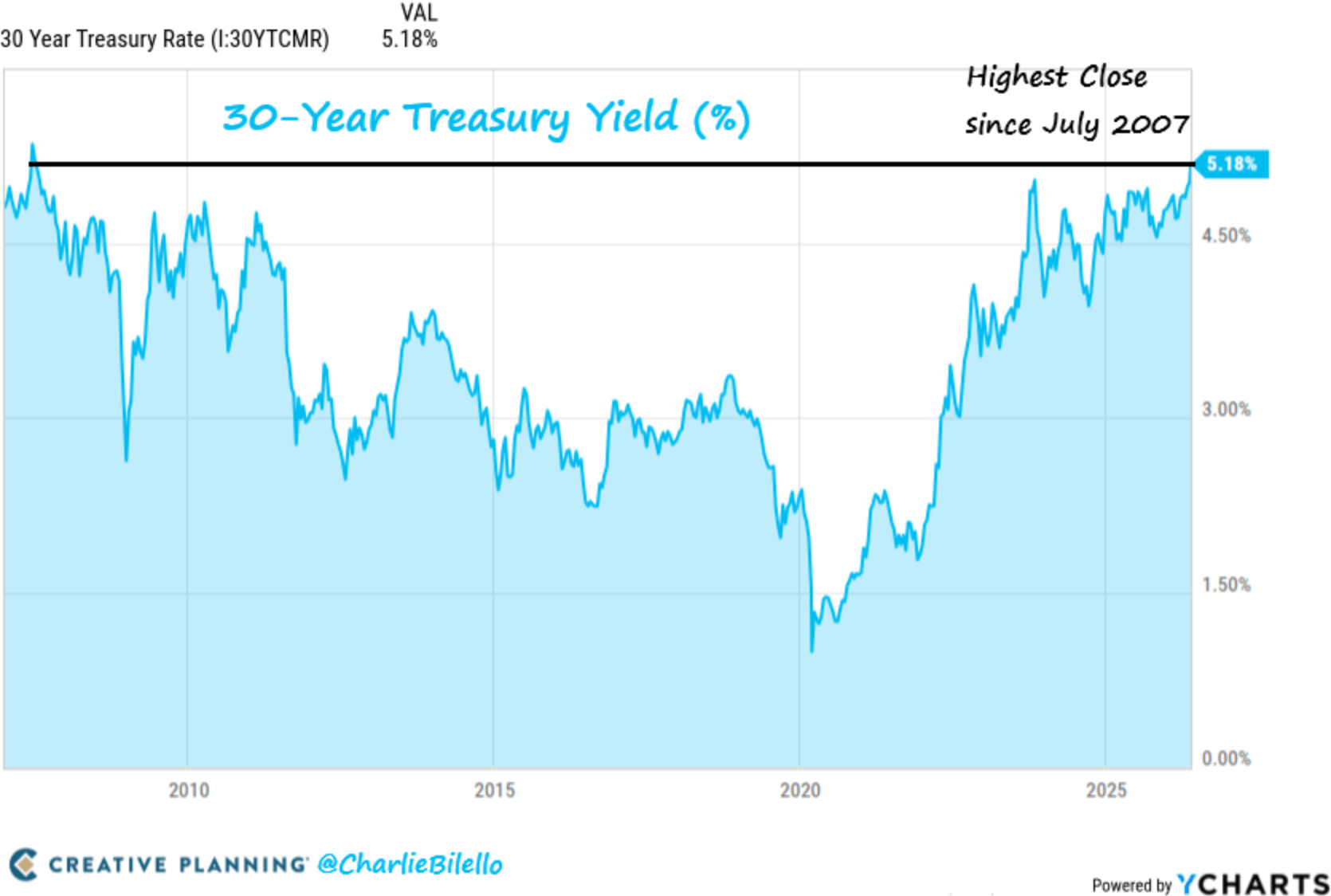
The 30-Year US Treasury Yield hit 5.18% this week, its highest close since July 2007 — Bilello, also via steve (MS Coherence score 67)
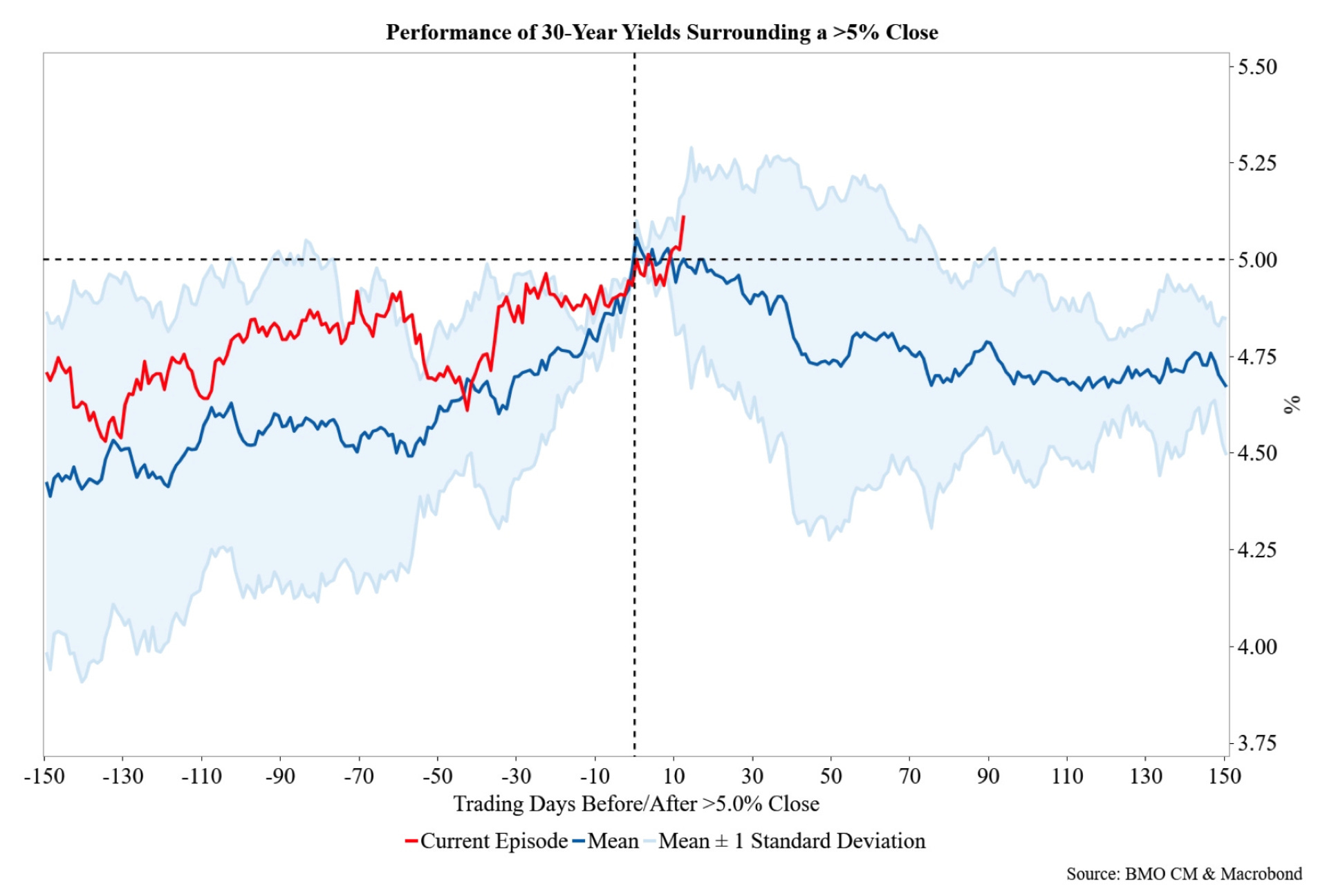
If this is a 2007-style structural high being broken, then BMO’s mean-reversion base rate (chart from last week) is sampling from the wrong distribution. The current episode (the red line riding the top of the band) is consistent with Bilello, not with the mean.
The underestimated parabola.
Jason's Chips (MS Coherence score 78) thinks the sheer volume and inevitability of CPO is underestimated but it “is not going to happen as soon as the most optimistic bulls think” and “volume shipments of phase one scale-up CPO will not occur until the Feynman generation.”
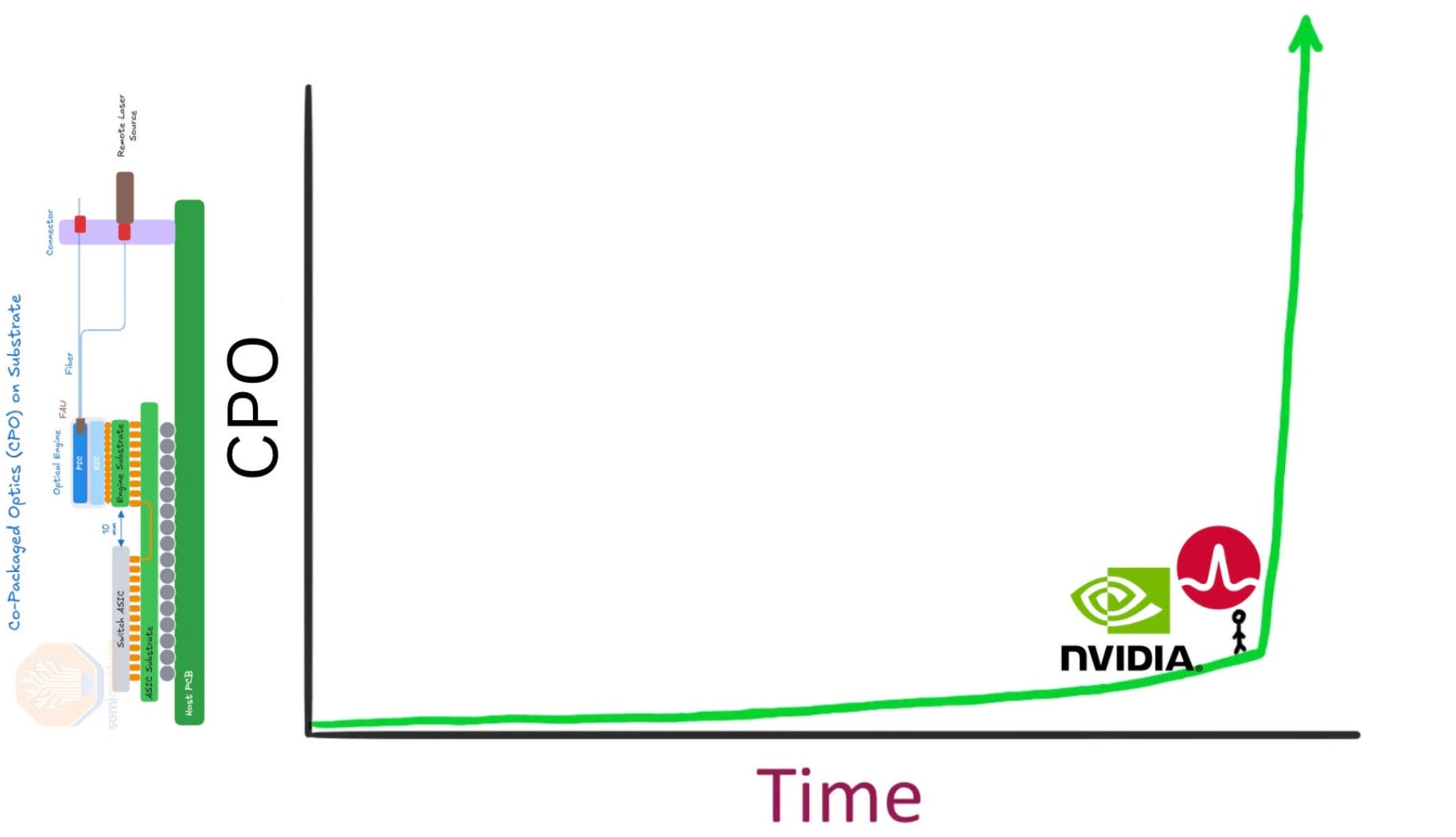
Co-packaged optics (CPO) — the optical components that convert data into light are built directly onto the chip’s package allow data to move as light with less power loss and more bandwidth than copper wires can manage — eventually replace copper interconnects.
On another planet…
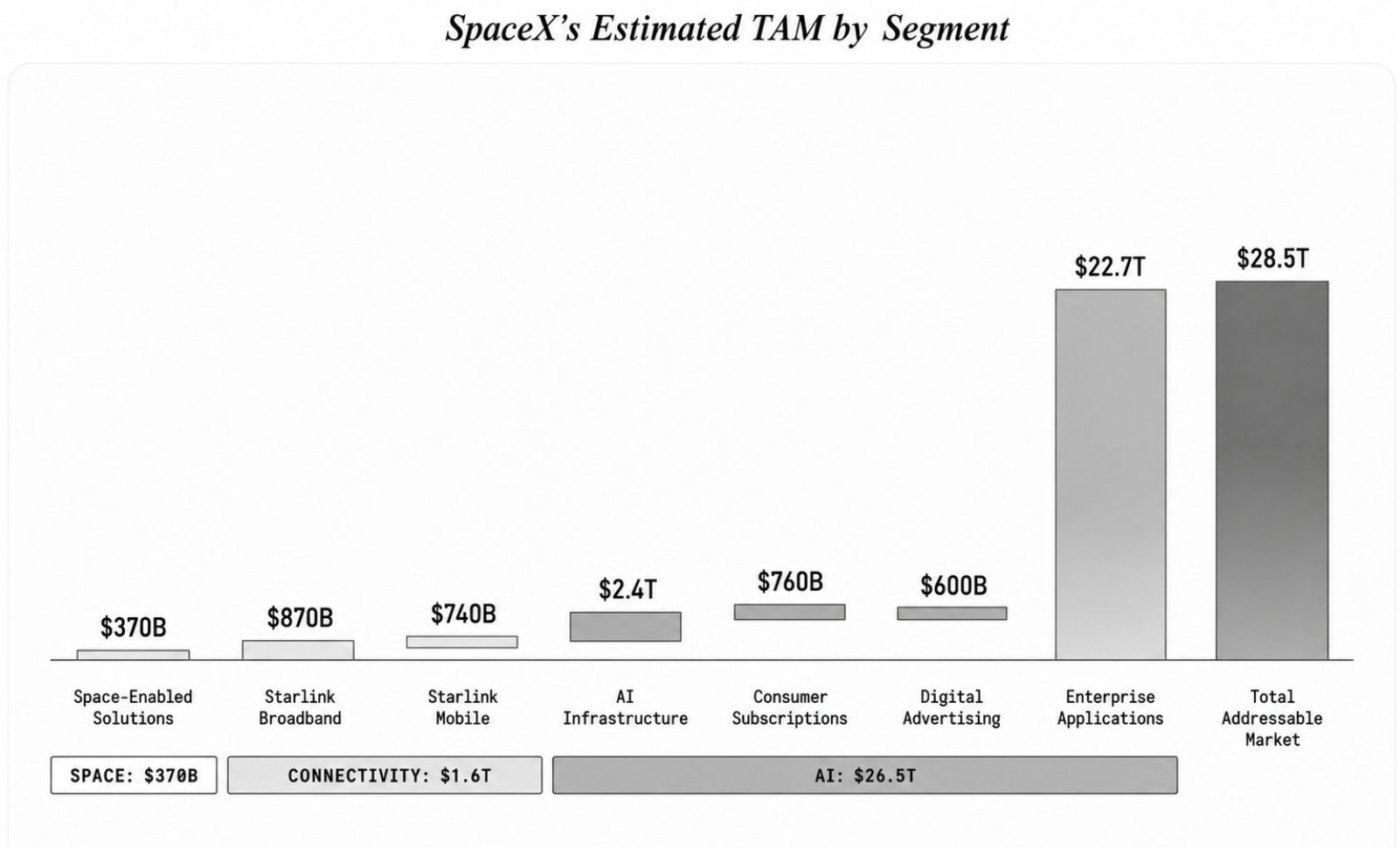
SpaceX addressable market: US$28.5 trillion. That’s 27% of the entire planet’s GDP: US$105 trillion — Sandro Vergueiro (MS Coherence score 78)
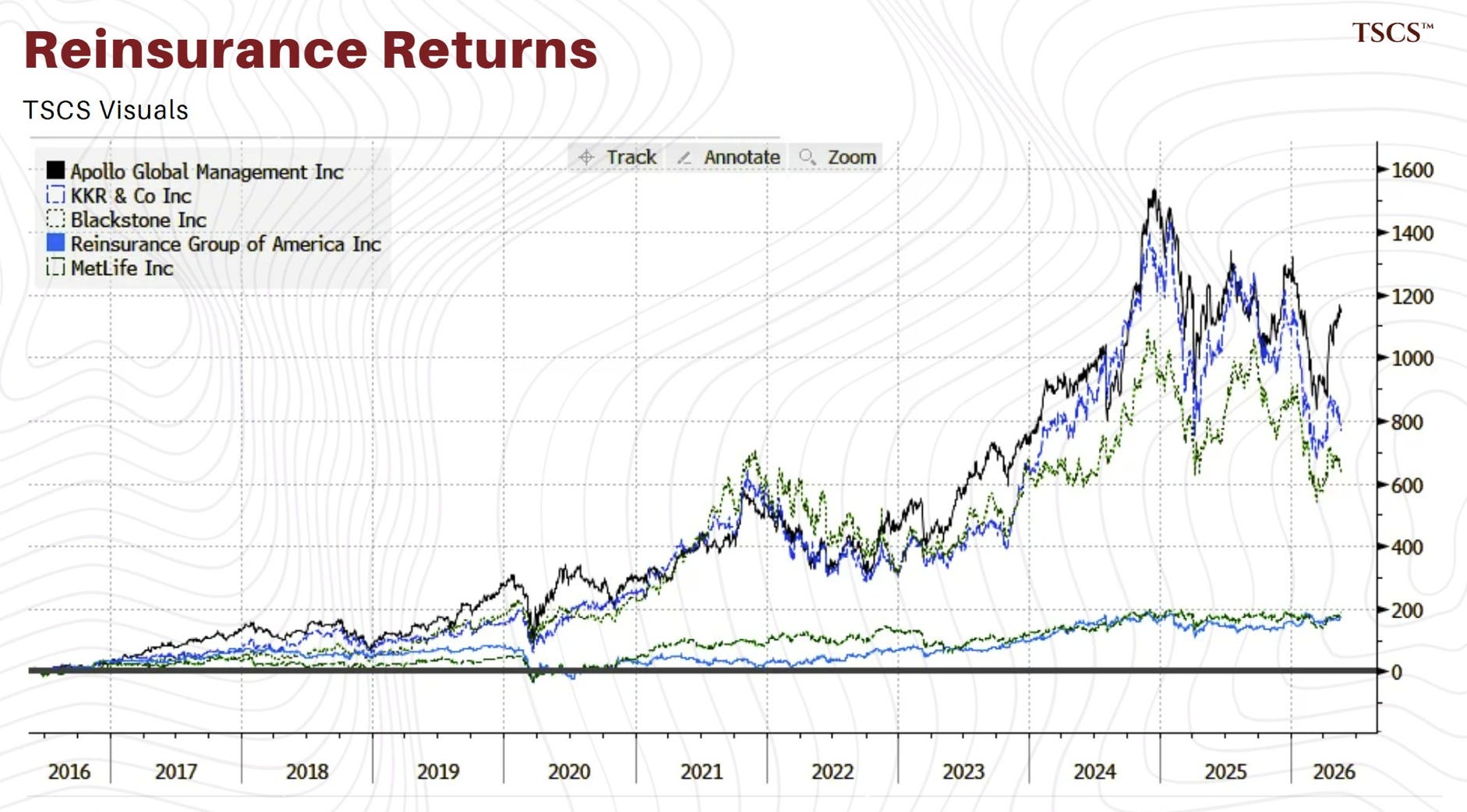
The safety she was sold is (again) not — TSCS (MS Coherence score 44)
The most conservative corner of American finance has been quietly rebuilt into something that is not conservative at all, the rebuild is documented in public filings, and the people who will absorb the consequences are the people who were told they had bought safety.
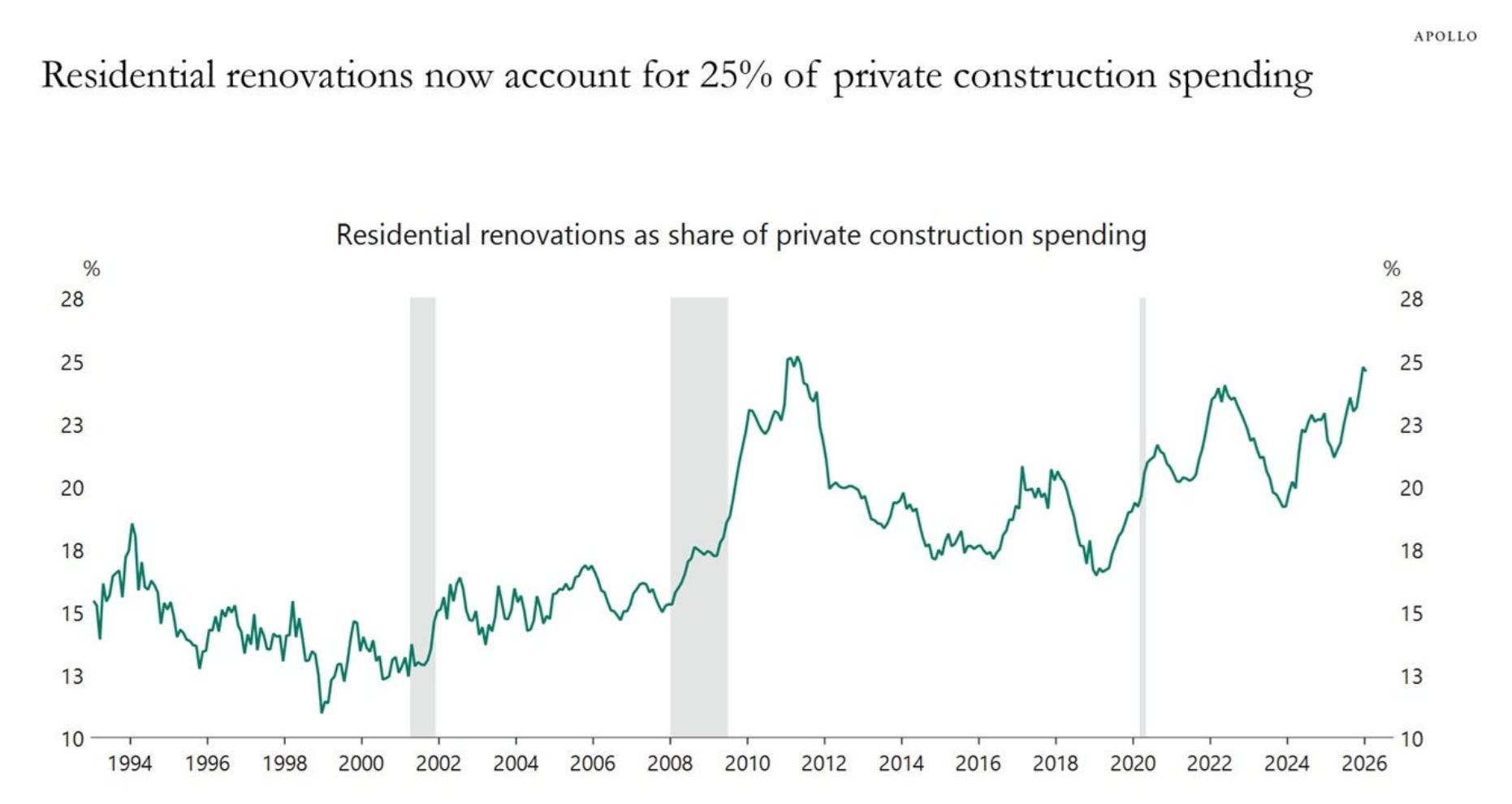
If you can’t move, improve.
Locked-in mortgage rates are keeping homeowners in place and driving a surge in renovation spending, see chart below. — Apollo vs steve (MS Coherence score 67)
Visit MarketStack The Edit · MarketStack Terminal
MarketStack is free today. But if you value my work, you can pledge for a future subscription. MarketStack is an independent, anonymous publication summarising publicly available commentary and views from across financial media. Nothing here constitutes financial advice or a recommendation to buy, sell or hold any security. All views are a synthesis of public information. Past performance is not a guide to future results. This publication is not authorised or regulated by the Financial Conduct Authority. The author writes anonymously in a personal capacity.